
Story 27 · Light and shadow 5+
Bani and the Painter of Shadows
≈ 8 min read
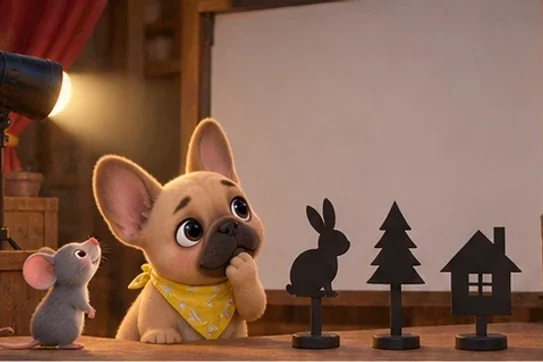
The Shadow Theater was preparing for an evening performance called How the Little Boat Found the Big Moon. Figures stood behind the white screen, the audience was already arriving, but the cloth showed nothing. No boat, no moon, not even the dragon’s famous tail. Bat the Artist flew upside down beneath the ceiling, calling, “The shadows have gone on strike!” Bani peeked behind the screen. Every figure was in place, but the lamp was shining at the side wall, where the enormous shadow of a teapot looked extremely pleased with itself. “I don’t think the shadows are striking,” Bani said. “They’re simply performing on the wrong stage.”
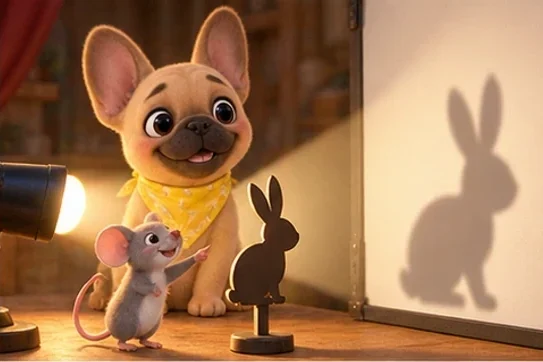
Bat placed the lamp behind the little boat and the screen in front. A sharp silhouette appeared at once. “Three players,” she said. “Light, an object, and a surface for the shadow.” Bani covered the lamp with his paw—the boat vanished. He moved his paw—the boat returned. Then he replaced the cardboard boat with clear plastic, and the shadow nearly disappeared. “So it matters what the light can pass through,” Bani said. Bat handed him a box of materials and officially promoted him to Assistant Chief Shadow-Tangler, because, according to her, “shadow artist” sounded far too ordinary.
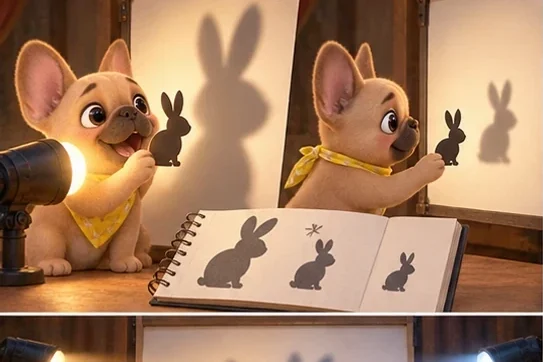
Bani moved the boat closer to the lamp. On the screen it grew into an enormous ship. He moved it nearer the screen; it became smaller and sharper. He tried the same trick with Bat’s figure, which turned into a gigantic winged monster. The real Bat inspected it and said, “At last, a portrait of the correct size.” Bani marked the useful positions with chalk on the floor. They discovered that the shadow’s size changed with distance, not with the figure’s mood. The discovery was immediately useful: they could make the moon huge and the boat tiny without cutting any new scenery.
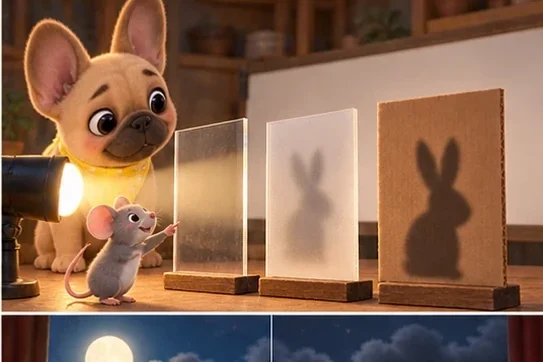
The box held clear film, thin fabric, and thick cardboard. The film left almost no shadow, the fabric made a soft gray shape, and the cardboard gave a dark outline. Bani placed fabric over cardboard and created mist above the sea. Bat added a piece of blue translucent paper, and the lamp turned the screen into evening sky. “So we can paint without paint—by changing how much light gets through?” Bani asked. “And by choosing where everything stands,” Bat said. Rehearsal felt less and less like fixing a problem and more like inventing a new show.
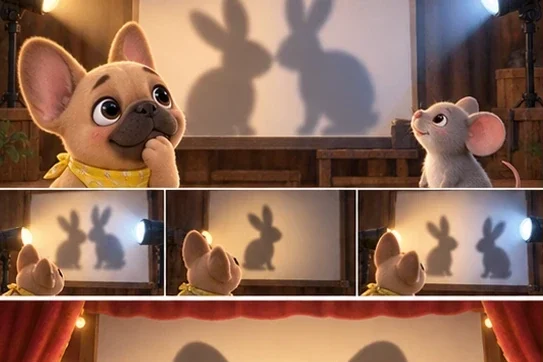
Then a helper switched on a second lamp. Suddenly there were two boats, two moons, and a dragon with four tails. The actors panicked because the story appeared to have doubled in length. Bani turned off one lamp—the extra shadows vanished. Then he switched both on and covered them one at a time, tracing which shadow came from which light. Instead of giving up on the second lamp, Bat moved it to the side and used the double shadow for the storm scene. The boat now seemed to rock between waves. “The problem became a special effect,” Bani said. “Theater enjoys doing that,” Bat replied.
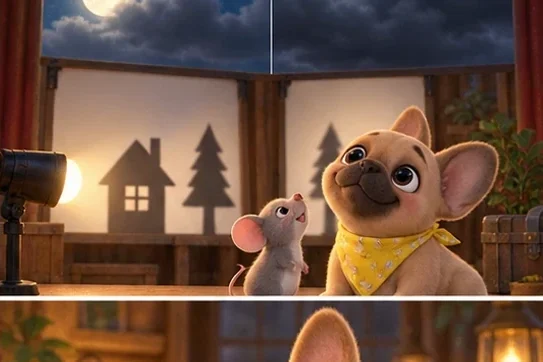
Just before the performance, a cloud covered the moonlight that had been entering through the window. Bani noticed the change without panicking. They already knew the stage lamp could work by itself. He adjusted it, checked the silhouettes, and raised the curtain. A small boat glided across the screen, a huge wave rose, and the round moon appeared. Children gasped at the right moments, and one toddler tried to catch a shadow with both hands. Bani watched from backstage and felt he was seeing two shows at once: magic for the audience, and carefully placed light, cardboard, and space behind the cloth.
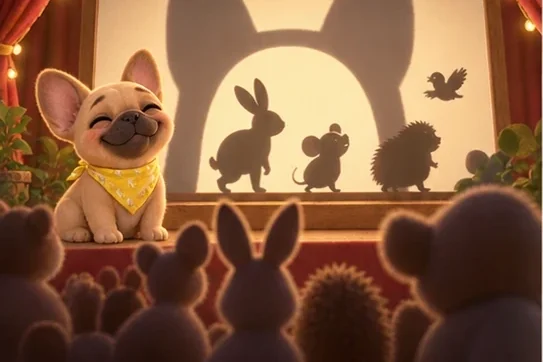
For the finale, Bat realized they had no gate for the characters to pass through on their way home. Bani stood in front of the lamp, raised his paws, and turned his head. His large ears became two towers with an arch between them. The audience burst into laughter and applause. The boat, dragon, and even the moon passed through “Bani’s Gate,” though the moon had to become smaller first. Bani stood very still and tried not to grin too much, in case the towers wobbled. He discovered that a shadow could tell a story without a single word if the shape and light were chosen well.
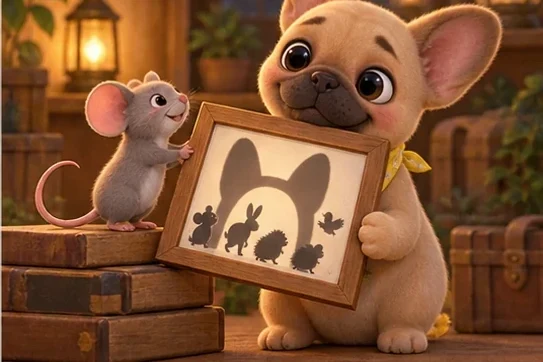
After the show, Bat gave Bani a small frame covered with white paper. “A one-lamp home theater,” she said. That night Bani tested the rules again: lamp, object, wall; closer to the light, the shadow grew; closer to the wall, it became smaller and sharper. He made a rabbit from his fingers, a tower from a spoon, and a surprisingly convincing sail from one ear. Before bed he switched off the lamp, and every shadow vanished. Once that might have seemed mysterious. Now Bani smiled. The shadows had not run away. Without light, they simply had nothing to draw with.