
Story 29 · Pollination and ecosystems 5+
Bani and the Meadow’s Little Helpers
≈ 8 min read
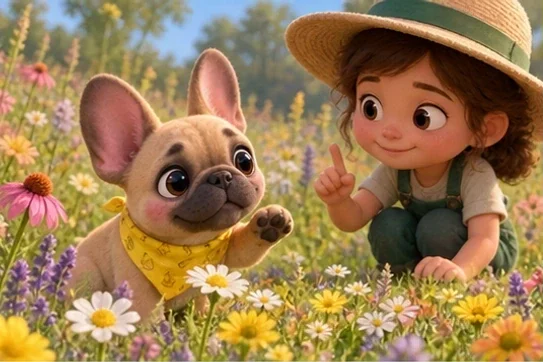
On Berry Pie Meadow, so many flowers were open that Bani assumed the festival would have the biggest pie of the year. But Gardener Goat showed him the strawberry plants. There were blossoms everywhere and hardly any tiny green fruits. “Where did the future pie go?” Bani asked. He saw yellow pollen on the flowers and offered to carry it from blossom to blossom with his paw. A bee named Maya the Explorer hovered nearby. “You could try doing the work of an entire meadow with one dog paw,” she said, “or you could first watch who usually does this without a schedule or salary.”
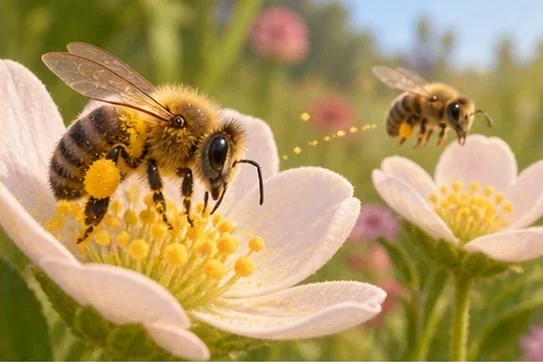
Bani sat on a folding stool and tried very hard not to wave his paws around. Maya climbed into a flower for nectar. When she came out, tiny grains of pollen clung to the hairs on her body. At the next flower of the same kind, some rubbed off. “I’m just having breakfast,” Maya said. “And helping the flowers at the same time,” Bani replied. He watched through a magnifying glass. A plant needed pollen moved between flowers so it could make seeds and fruit, while the bee needed nectar and pollen for food. “So a pie begins a long time before the kitchen,” Bani concluded solemnly.
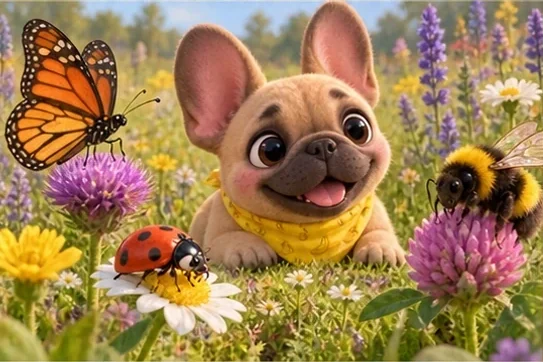
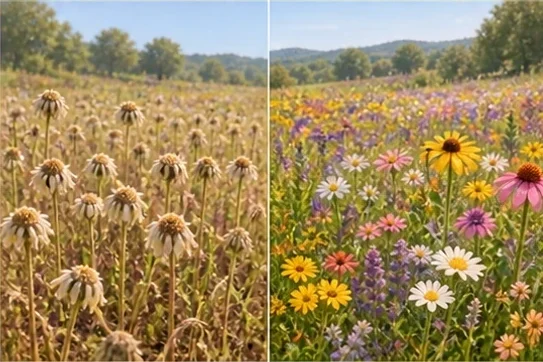
A round bumblebee arrived next, then a butterfly with a long tongue and a small beetle that looked as though it had wandered into the meeting by accident. They visited different shapes of flowers. Bumblebee could work in deep blossoms, Butterfly landed on broad ones, and Beetle liked open flowers. “Why don’t they all eat at the same café?” Bani asked. Maya explained that flowers and pollinators came in many forms. A meadow with only one kind of flower might be generous for a short time and empty later. A meadow with different plants could offer food across different weeks.
Bani decided to build a giant “hotel for every insect” out of a box and move all visitors into it. Gardener Goat stopped him. “They do not always need a hotel. Often they need us to stop removing the places they already use.” Together they set out a shallow water dish with landing stones and left a patch of dry hollow stems for shelter. They did not mow every corner of the meadow bare. Bani marked the quiet patch with a string. “No catching insects, no poking unfamiliar nests,” he repeated. It did not sound especially heroic, but the meadow seemed to approve.
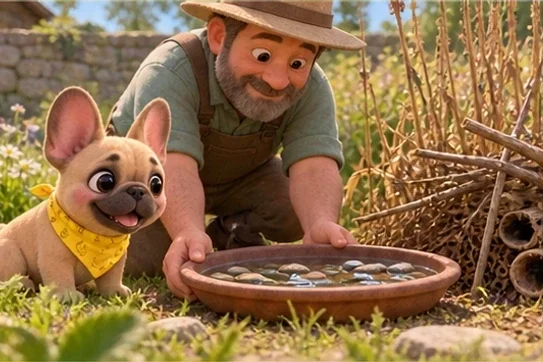
A few days later, hungry caterpillars appeared on some leaves. A neighbor suggested spraying the whole meadow with a strong treatment. Bani imagined saving the future pie with one dramatic spray, then remembered Maya. “What happens to the helpers?” Gardener Goat chose a safer response for the specific problem instead of treating all the flowering plants without need. Bani learned that a quick solution aimed at one creature could also affect many others. Looking after a meadow meant noticing the connections, not only the most obvious problem.
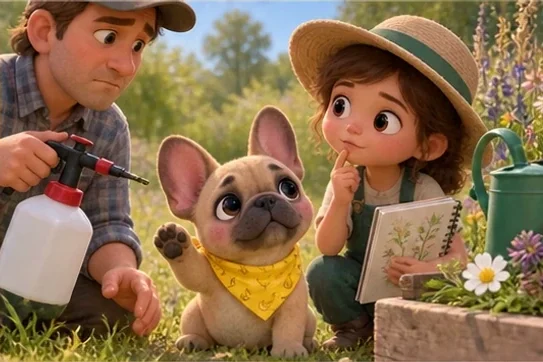
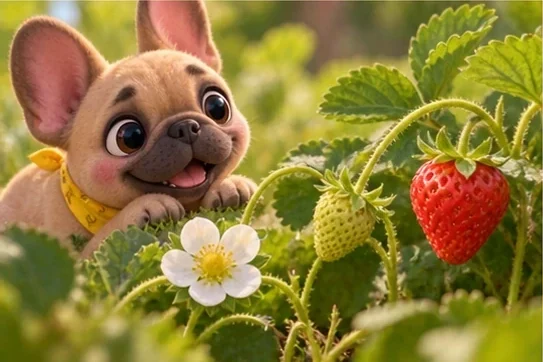
A week passed. Tiny green fruits began appearing where some flowers had been. Bani walked between the beds counting them, although he kept losing his place whenever a bumblebee flew by. Maya landed on the brim of his hat. “There’s your pie,” she said. “It is extremely small and not very pie-shaped,” Bani replied. But now he could see the chain: a flower feeds a visitor; the visitor carries pollen; the plant makes seeds and fruit; later a berry grows. It felt like a secret relay race where every participant passed something important to the next.
By festival day there were enough berries. Long tables held baskets of strawberries, raspberries, and currants. Bani made a small sign: THANK YOU TO THE HELPERS WE ALMOST DON’T NOTICE. He drew a bee, a bumblebee, a butterfly, and a beetle. The beetle looked suspiciously like a potato with legs, but Maya said the resemblance was respectful enough. Then everyone ate pie. Bani decided his favorite bite was the one where he could remember the whole path from flower to berry.
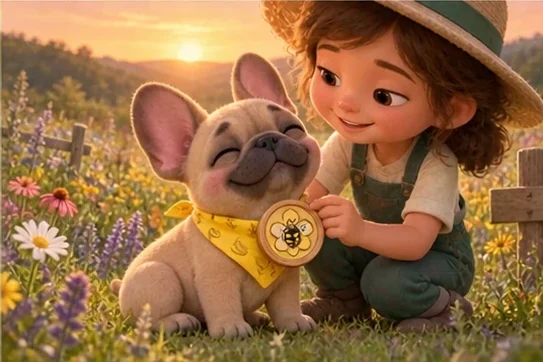
Before flying away, Maya gave Bani a flower badge dotted with golden pollen. “You do not need to manage the meadow,” she said. “Help it remain a place where different living things can do their work.” At home, Bani planted suitable flowers with an adult and set out a safe shallow water dish. He stopped trying to catch every visitor for inspection. Sometimes he simply sat nearby and watched who arrived. Watching small helpers, he discovered, could be as exciting as any big experiment—especially when the season ended with pie.