

Story 14 · Digital Safety 5+
Bani and the Secret Screen Door
≈ 5 min read
One rainy evening, Bani opened a banana castle game on his tablet. Suddenly a shining door appeared in the middle of the screen: “Come in and get a thousand treasures!” Before entering, she asked for a name, home address and a photo. Bani had already raised his paw, but the door smiled too widely, and unfamiliar shadows were whispering behind it. The yellow medallion on his scarf jingled alarmingly.
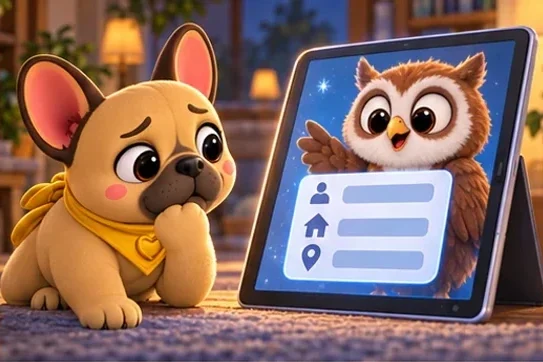
Bani remembered the words of the adult Bear: personal information is like the keys to a house. Your name along with your address, where you are, your password, and your personal photo can tell a stranger a lot. Such keys cannot be given away just because a bright door promises a prize. Bani removed his paw from the button. The door immediately stopped smiling and began to rush him, and this became another reason to stop.
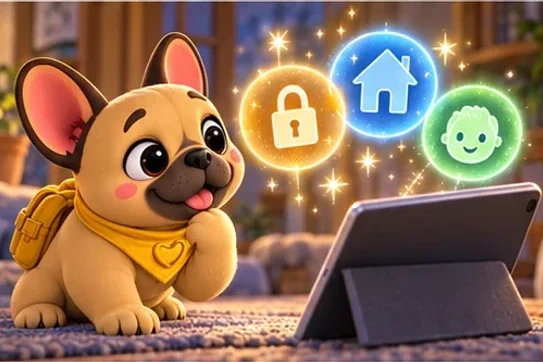
The house, face, lock, and map icons flashed on the door frame. Bani could recognize them, but was not obliged to decide everything alone. He did not fear punishment and did not hide the screen, but called Bear. “Asking for help in front of an unfamiliar button is not cowardice,” he said. “It’s one of the smartest digital skills.” Together they looked at what exactly the window was asking for and where it came from.

The bear closed the suspicious door, checked the application and turned on secure settings. They came up with a strong password that Bani would not share with friends or strangers, and saved it with the help of an adult. Then we made sure that the game does not see the location and camera unless necessary. The treasures did not appear, but the tablet stopped whispering. Bani felt not disappointed, but relieved.
Later, Bani wanted to send a funny message to Red Panda. He chose kind words and a picture to show. He did not send someone else’s photo without permission, and first discussed the meeting place with an adult. Bani imagined that each message was a paper airplane: after launch, it could fly further than planned. Therefore, before sending, he thought again.

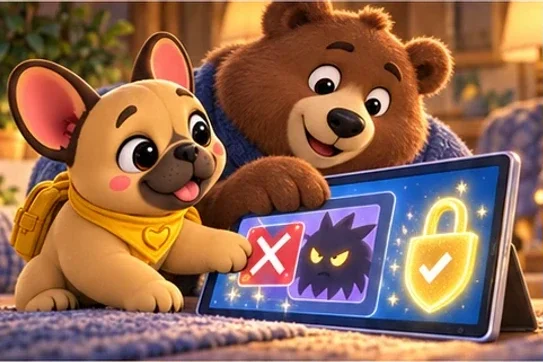
And then an angry message from an unknown player appeared on the screen. Bani did not respond with rudeness, argue or agree to a secret meeting. He showed the message to Bear, blocked the stranger and used the report button. “If the Internet is scary, unpleasant, or you are asked to hide a conversation from adults, you need to tell,” Medved reminded. The shame had to go away, but the help had to remain.

There was a Timer Flower growing on the table. As Bani played, his petals gradually closed. When the last one closed, Bani kept his game, looked away into the distance, stretched and gave his eyes a rest. Outside the window the rain had stopped, and a real puddle reflected the sky brighter than any screen. The tablet waited patiently on the shelf.

Before going to bed, Bani drew up three rules: protect your personal keys, call an adult when in doubt, and leave screen time. The shining door never returned. The tablet has again become a useful tool for games, drawings and conversations, but not the master of the day. And if the new button began to promise miracles too loudly, Bani heard the ringing of the medallion and first asked the one he trusted.