

Story 34 · Orientation 5+
Bani and the Map of Lost Paths
≈ 8 min read
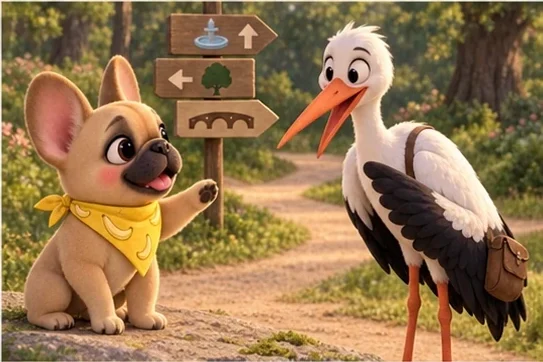
In the Park of Changing Paths, the signs received new names every morning. Yesterday one path was Lilac Lane, today it was Three-Pinecone Way, and tomorrow it might become “The Road to Somewhere Very Pretty.” Postman Stork stood at the gate holding a letter for the Music Pavilion. “The envelope says: follow Moon Lane and turn at the Blue Sign. But Moon Lane is now Pie Lane, and every sign is green.” Bani suggested choosing the prettiest path. Stork asked, “Pretty means correct?” Bani looked at three equally inviting paths and realized the park had prepared a puzzle.
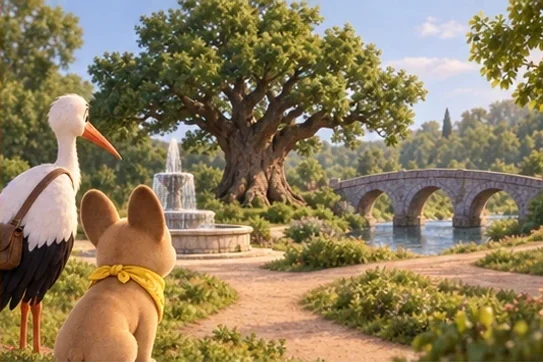
They decided to look for things that changed less often than signs. Near the gate stood a fountain shaped like a stone fish. Farther on grew an old oak with two thick branches like raised arms. Beyond it was a bridge with three arches. “Those are our anchors,” said Stork. Bani imagined real anchors hanging from the trees and laughed. Then he understood: even if every name disappeared, the fountain, oak, and bridge could still tell them where they were. He drew simple symbols on the map. The fish looked like a boot, but they both knew what the “boot” meant, which was enough.
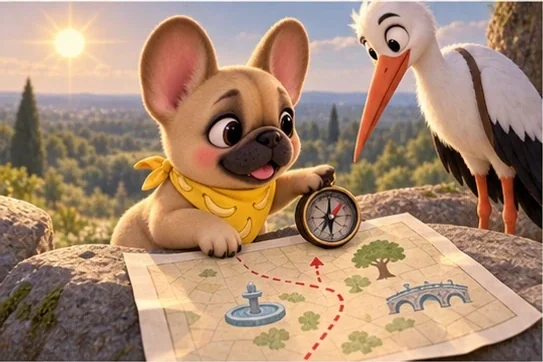
In an open clearing, Stork took out a compass. Bani turned the map until north on the paper matched the compass needle. Before that he had always held a map whichever way made the words easiest to read, then wondered why a left turn suddenly looked like right. Now the paths on the map lined up with the paths around them. From the fountain they went toward the oak, then toward the bridge. Bani described the route aloud: “Fountain behind us, oak ahead, bridge to the right.” Once they discovered Bani meant a different oak. Checking saved them from a long walk to a very unmusical pile of acorns.
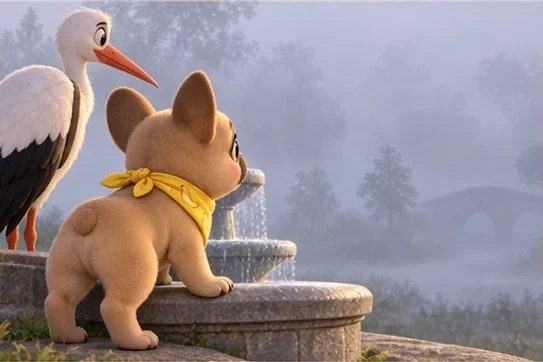
Then fog settled over the park. The distant bridge disappeared and every sign became a gray rectangle. Bani wanted to keep walking somewhere—anywhere—just so they were moving. “When you cannot see the next landmark, go back to the last place you know for certain,” Stork said. They returned to the old oak and chose a short stretch to a stone bench visible through the fog. From there they moved to a small pond. The route stopped being one giant leap into the unknown and became several small, clear pieces. Bani decided fog was unpleasant, but an excellent teacher of careful navigation.
At the bridge they met another problem: the path was closed for repairs. “The map is wrong!” Bani complained. “The map shows what was known when it was drawn,” Stork said. They found a detour along the pond and marked it in pencil. Bani did not redraw the whole park. He connected the new path to things they already knew: oak to pond, pond to the far end of the bridge. When they met a gardener, they also asked whether the route was open. Bani learned that a useful map did not have to be eternal. People could help it become more accurate.
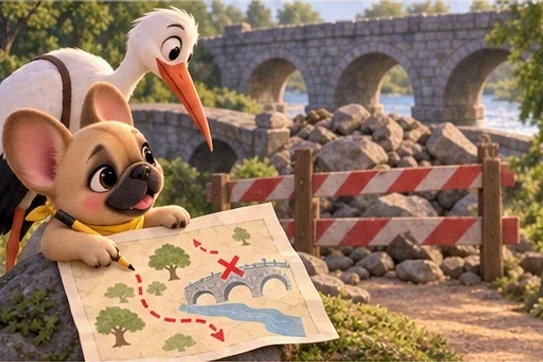
At last soft music came through the fog. Bani wanted to run toward the sound, but Stork suggested checking first; music can travel a long way. They reached the three-arched bridge and saw a round roof beyond it. Only then did they know the pavilion was truly close. The letter arrived on time, and the musicians played a short march for the two successful postmen. Bani marched in a circle until he remembered there was still a return trip. “Easy! We remember everything,” he said. Stork merely raised one eyebrow.
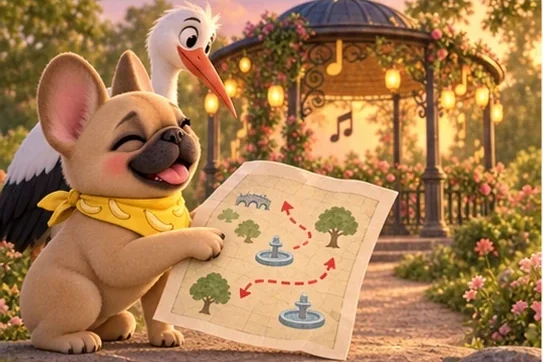
On the way back, Bani described the route in reverse: pavilion—bridge—pond—oak—fountain. But the turns had to be reconsidered. What was left on the way there could become right on the way back. Bani stopped relying only on words and checked real landmarks again. Near the oak they noticed their tracks in damp soil, but did not use them as the only clue—the next rain could erase them. When the stone fish fountain appeared ahead, Bani felt proud not because he had “memorized the road,” but because he knew how to rebuild it from several dependable clues.
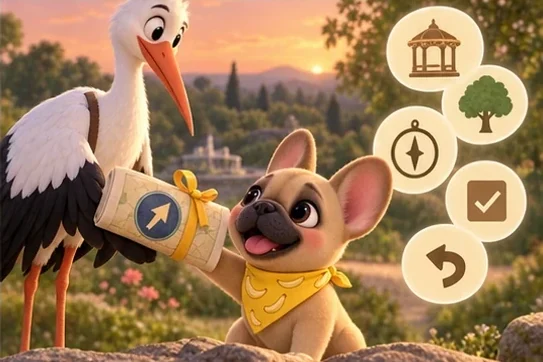
At the gate, Stork gave Bani a small map with a movable north arrow. “What will you do if you get lost?” he asked. Bani answered, “I won’t keep going at random. I’ll return to the last place I understand, find landmarks, check direction, and ask for help if I need it.” Then he added, “And I won’t choose a road just because it is called The Road to Somewhere Very Pretty.” The next morning every sign changed again. One proudly read DEFINITELY THE CORRECT ROAD. Bani laughed, checked his compass, and walked the other way—toward the familiar stone fountain.